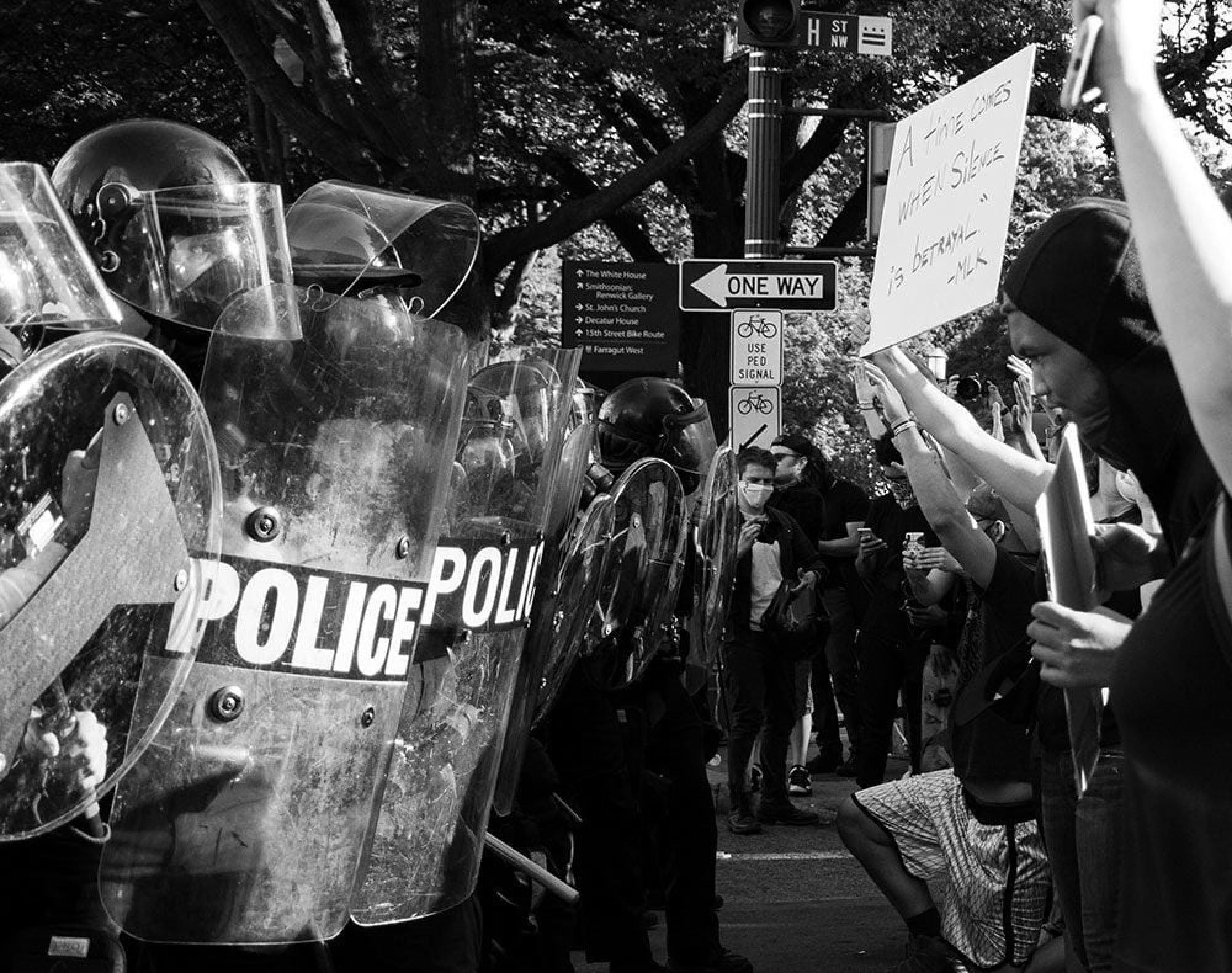
If  conflict theory states that social order is maintained by domination and power, rather than consensus and conformity, American history and our political climate certainly support that idea. Contrary to popular opinion, I do not think that the privileged (celebrity, wealthy, elite) shape or define the law, rather the penalization of criminal infractions are not evenly distributed. Therefore, it is within the realm of rationality to assert that law and the implementation of policy is subjective. The basis of this subjectivity, though abundant, racism and socioeconomics remain at the forefront. The question no longer becomes what is criminality, but how do we as a collective society define criminal. Empirical evidence shows us that if you are a black man, the probability you will experience stop and frisk, get arrested and serve jail time is significantly higher than that of your white counterpart. This same evidence also debunks the perception that blacks are more likely to commit crimes, which is in direct contradiction to the narrative of black criminality; they are however, more likely to get penalized. What does this truly say about how “criminality” is defined not only by our law but by society? Why is it that Brock Turner can serve a 30-day jail sentence for the rape of an unconscious woman and not a single officer served time for the death of Freddie Gray? The criminal justice inequality in America has fueled groups like the Black Lives Matter movement in the same way it did for the Black Panther Party during the Black Power Movement in the late 60s. These resistance groups erupted and gained notoriety as a direct response to this perpetuation of state violence against black and brown communities. Ta-Nehisi Coates believes that if there is an answer to contemporary racism, it lies in confronting the past. If we are to understand the significant of his statement we must look towards Michelle Alexander, as she thoroughly researched mass incarceration in her book, The New Jim Crow, and found that there are more black men under correctional control than there were under slavery. Let that sink in. It is difficult to see the criminal justice system as anything other than a tool used to systematically disenfranchise, marginalize and render citizens, disproportionately people of color, to permanent 2nd class citizens. Mass incarceration and policies enforced against communities of color are used to create and maintain racial subordination. We continue to impose this racial hierarchy, when we prosecute former convicts once they have served time. We see this in the form of limited employment, which requires acknowledgement of a previous felony on job application. We see this by restricting and in some states outright banning their right to participate in elections. If we remove a citizen’s right to participate in a core function of our democracy, what purpose or contribution can they serve when the law has stamped their being as expendable? James Baldwin warned that, “the most dangerous creation of any society is that a man has nothing to lose.” History shows us that the subjugation of racial subordination is a necessary function of our economic structure. Mass incarceration continues to perpetuate the trend of free labor under the verbiage of the 13th amendment that outlawed slavery, “except as punishment for a crime.” The privatization of our prison industrial complex, ensures a social order by domination, just as chattel slavery did at inception of this country. The system of caste, specifically by race, has not disappeared from the American conscious, but has become more effective in terms of oppression.
Is America Truly Capable Of Fostering Equality?
 As the National Anthem blared in the background, I found myself paralyzed in deep contemplation. After watching America Divided earlier in the day, I sat there as the song rang loudly over the speaker and thought how this song is defined by other people in America. And I found myself asking, how would the people in Flint Michigan define this song, the victims of hurricane Katrina, the students of Pinellas county, the residents of the NYC still facing discriminatory housing practices, the occupants of the south side of Chicago, ex-factory workers in Detroit or the Standing Rock Sioux Tribe? I want to know how this America, the America we stamped as expendable – would define this anthem?
As the song ended and the crowd took their seats I found myself met with fierce hostility as the man in front of me turned and yelled, “Stupid Fucking Bitch, fucking sitting down during our song.” I sat there frozen and overwhelmed with emotion- but not for the way he accosted me, for I knew it was bigger than me. I held back my tears, because it was at that moment, I was reminded this is the reality of what people in disenfranchised communities face every day. This is our America and this vile ideology permeates deeply within in our cultural makeup. How is it we can boast about the home of the free and the land of the brave, when large sections of the population have been systemically silenced out of the American Dream? If the world is a reflection of what we see, then how can anyone see it as anything other than a politically engineered caste system? The America I see tells me that entire cities can be rendered disposable for nothing more than a bottom line. That state violence can be carried out with impunity. That a president can win an election boasting about sexually assaulting women and overtly promising racist policies. My America tells me that race, religion, gender and sexual orientation do matter.
We are surrounded by powerful forces that benefit from a nation divided. But we as individuals, at the core, are our own worst enemies. To our detriment somewhere along the way we have simply lost the ability to engage in constructive dialogue. So I challenge the gentlemen who greeted me with hostility…
You want to have a conversation about veterans? Great. Let’s talk about the history of US foreign policy and imperialism. Is it not entirely possible to be a pacifist and still empathize with veterans? To honor their unyielding dedication to the American idea, their sacrifices and dangerous deployment? Am I not allowed the same fortitude to criticize the powers at be that put their lives in such peril? You want to have a conversation about race in America? Great. Let’s talk about the history of state violence waged against people of color, how policy is implemented and our current prison industrial complex. We aggressively condemn those that speak out against state violence, yet remain silent while we send them off to sit in jails unable to pay egregious bail from prejudicial police practices. You want to talk about crime in America? Great. Let’s talk about intentionally defunding education, minimum wage and the war on drugs. You want to talk about patriarch? Great. Let’s talk about rape culture and the history of misogyny in this country. Let’s talk about how a man can rape an unconscious women and serve less jail time than a man picked up for a nonviolent drug offense.
What you sir defined as lack of patriotism Einstein would say “Few people are capable of expressing with equanimity opinions which differ from the prejudices of their social environment. Most people are incapable of forming such opinions.” I believe silence is a political statement. When we consciously make the decision to remain silent, we are siding with the oppressors. Even if this began as an accidental act of dissent, I left the arena with a very real awakening – is American truly capable of fostering equality?
Kaepernick: How America Defines Freedom of Speech
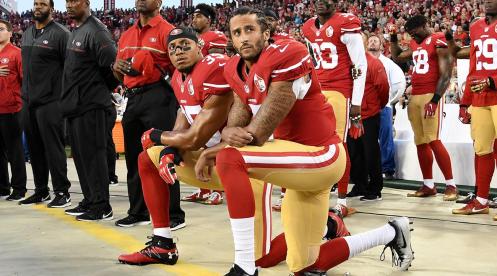
Criticism of San Francisco 49ers Quarterback Colin raises a few interesting questions for those of interested in free speech. The backlash against his protest during the national anthem show a clear disdain by some for activism by anyone able to monetarily capitalize within an oppressive system. Kaepernick, some critics, have asserted should show even greater reverence to the flag due to the enormous advantages they argue America has bestowed on him. Others argue that his action disrespects the military. Both are red herrings carefully crafted diversions to avoid addressing the real issue- an issue that has been plaguing this nation since its inception. In fact, the American consensus echoed the same thing when Boxer Muhammad Ali gained notoriety as an outspoken critic and champion of the Black Power Movement. Even to this day, it is more palatable for Americans to see Ali merely as a sports figure, even while he pushed the racial lines, than it is to see him as an intellectual in the fight for equality. If you are one of the few that manage to escape the confines of intentional marginalization, you quickly become a victim of ad hominem attacks when you chose to speak or in the case of Kaepernick kneel, for those that fall outside the margins of our system. Inclusivity, historically has never been a part of American construction, even though most would prefer argue otherwise. It is blind patriotism dressed up as American pride that allows for historical amnesia to blur the lines of history when talking about race and inequality in this country. Until we can come to terms with our history, amnesia and the overwhelmingly unwillingness to have honest discussions about an oppressive system that allows for sections of the population to be rendered disposable, of which are disproportionately people of color, we will continue to see attacks on anyone who stands in protest with those that are marginalized and deflect the conversation to avoid tackling to real root of the issue – equality.
Subjectivity of Freedom
As fireworks lit up the night sky this past July 4th, I couldn’t help but wonder- what exactly does freedom mean in America? In the midst of the yearly celebration of American independence in defense of human freedom, numerous stories of police brutality, Black and brown people killed while in police custody continued to flood the airways. The stark contrast between the two prompted the main objective for this piece to explore the notion of freedom for those living on the margins of American society. While we tend to think of freedom as a fixed idea, the manner in which people have attempted to define freedom has varied substantially over time.
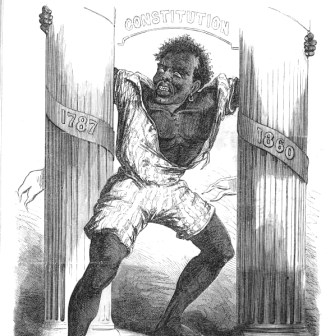 Tensions between the principle of freedom and American practice are certainly not new. Former slave Frederick Douglas provocatively posed this question in his 1852 speech “What to the Slave is the 4th of July. Lamenting the existence of human bondage in America he chastised Americans for celebrating their freedom and independence while enslaving 3 million people. If freedom is defined as the power to act, speak and think without hindrance and restraint how can we explain polices that disproportionately affect people of color, specifically within the criminal justice system?
The same could be said at the present moment about the current practice of mass incarceration in the United States, which has been compared to slavery. In her book, The New Jim Crow, legal scholar Michelle Alexander explores the role race has played in mass incarceration. The problem has been most acute when associated with drug crime. Since the War on Drugs began in the 1970’s statistical data shows us that nearly 80% of people in federal prison and 60% in state prison for drug offenses are people of color. To understand the gravity of what that means- more black adults are under correctional control today than were enslaved in 1850. It is important to note however that many of these implementation practices began after the Civil War. Where poll taxes and literacy tests served to reduce if not exclude sections of the population from voting, in the current system they represent policies such as voter restrictions placed on ex-felons. If we restrict a fundamental concept of our democracy – of which disproportionately affects people of color, it speaks poorly to our proclaimed adherence of freedom and equality in America-and therefore perpetuates oppression.
The matter however goes beyond a simple reading of policy and should involve safeguards to ensure that such laws do not disproportionately impact people of color. We must revisit policy continually in an effort to ensure that it does not replicate indiscriminate practices. So that Harvard Professor and linguist Bruno della Chiesa observes the structure does not remain exactly the same but, “become even more efficient in terms of oppression.” In order to avoid this we must abolish these laws, find ways to reinfranchise those we who have already been excluded and put safeguards in place to ensure the cycle of oppression, as a legal entity, will cease to exist. When we choose not to speak out or stand in solidarity with the very activists fighting oppression, we are siding with the oppressor. Changing the world and influencing policy is no small feat, but if we view this through the lens of Howard Zinn it seems within our grasp. He said, “A small act when multiplied by millions can change the world.” If we are to create a better world for our children, for future generations – what small act are you going do?
America. The Land of the Free?
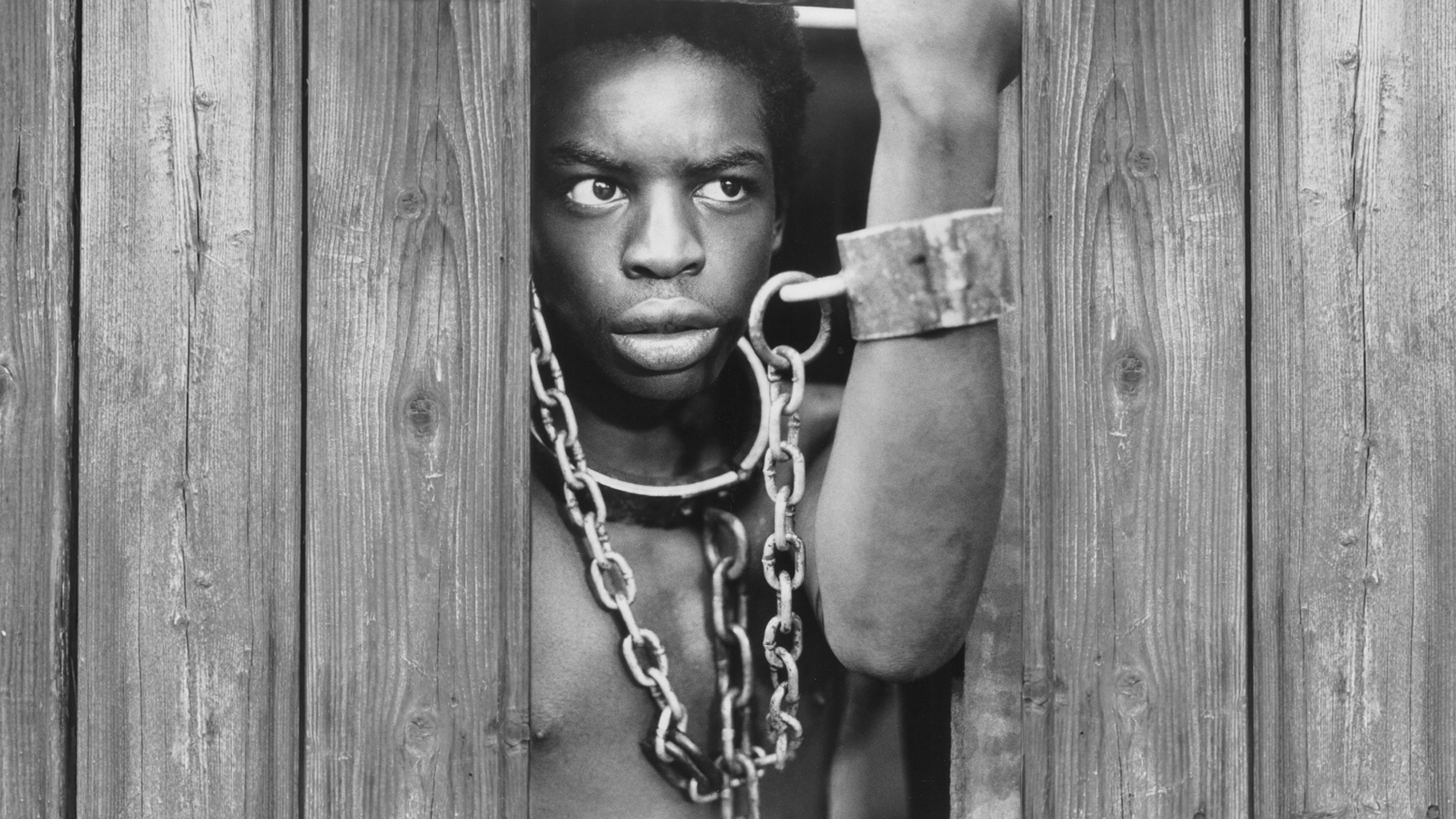
Music, confetti and fireworks fill Main street as the American flag waves in the wind. Hundreds crowd the streets and echoes of laughter fill the air. However, I couldn’t help but wonder what exactly are they celebrating? Are they celebrating independence from a tyrant nation, the idea that “freedom” in 1776 was now obtainable or that we conquered our oppressors? I find it difficult to celebrate America as a great nation when we are surrounded by inequality and suffering. Are we knowingly participating in a great disservice of our history- a complete ambush? As America annually celebrates conquering it’s oppressors while at the same time brushing over the genocide of Native American’s and captivity of our fellow man, I can’t help but feel anything less than joyous.
In 1865 victory bells rang loudly when Lincoln announced the abolition of slavery. But the fatal caveat, the same men who cried victory are the same men who intended freedom to be synonymous with abolition. If man were truly free, how do we explain Black Codes, convict leasing, lynching, Jim Crow, the KKK, COINTELPRO, Black Panther Party, poverty, predatory mortgages, mass incarceration and Black Lives Matter? If man is truly free, then why do we have a history of resistance?
The definition of freedom infiltrates every aspect of how we conduct our daily lives, how policy is structured, how stereotypes are molded and how war is justified. So when we say, “America, the land of the free” what exactly does that mean?
Patriarch
She lost more than just her voice that night. The reckless crime spree robbed her of her dignity, her safety and whittled away at her worth. Flashbacks blur the lines between illusion and reality and like a broken record the words, “how do I make this stop?” play over and over in her dreams. Her hands clutch the steering wheel as she rounds the corner of the parking structure. On any other day she would have avoided this parking garage, just as she now does with walks after sunset, dresses and martinis. But today, today was different. As she hustled towards downtown the noise from the flickering street light above induced a panic and layered her body in a film of sweat. Terror alarms her every move as she plays her daily game of hide-and-seek. Her jaunt becomes a wobbly as the anxiety of arriving late weighs heavily on her mind. You see, she has become a professional at the sport of playing cat and mouse with her senses. From the sound of shoes beating on the pavement, to the catcalls whistled her way, only to serve as a constant reminder of the soot that covers her like a jacket. She has acquired the necessary skill in order to navigate her way through the maze of screeching buses and hollering subways. All the while, quick like a cat, dodging most human interaction. When she finally arrives the air is frigid and the crowd silent. As they rose and the gavel slammed down onto the bench, despair lit up the room like fireworks. For it was not his custom made suit that outwitted the jurors, or that his lie was more believable than her truth. It is that justice fell short and landed on the steps outside city hall. As she stood face to face with her assailant, his smirk pierced her heart as the judge read, “30-day probation” for the burglary that paid homage to the patriarch.
The Rise of Trump
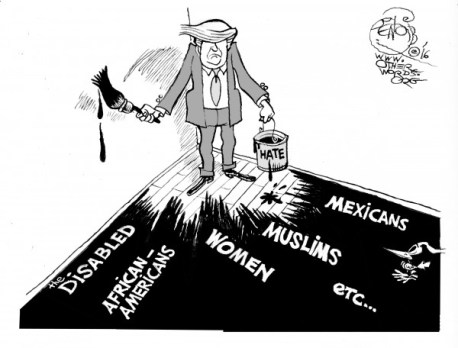
It has become a trite expression to argue that history repeats itself. While this assertion is problematic in any number of ways, if we view the rise of the presumptive Republican nominee Donald J. Trump from a historical perspective his popularity with certain segments of American society may not seem so surprising. Though his outlandish positions on everything from abortion, immigration and foreign policy have ignited some of the fiercest debates, his rhetoric is nothing new. The core values he represents are deeply rooted in the history of racism and oppression in the United States. An open and honest look into history reveals Trump to be much less a phenomenon than the personification of decades of oppression, inequality, systemic racism and political and corporate corruption.
Ironically however, Trump has positioned himself as an outsider crying out truth to a weary nation. In the bellowing echo of his call to “make America great again” is the disturbing question – what exactly is he is using to measure greatness? It is not clear, even to the most acclaimed academics, what Trump means. Political dissident, professor and author Noam Chomsky pointedly asked, “Does he mean what he is saying?” The same words I have echoed in my own struggle to grapple with “Trumpism”. In a historical context however his positions on everything from climate change, promoting torture, the refugee crisis, to racist policies, point to the problematic history of the failures of American democracy. Our brazenly obvious ability to ignore our departure from our professed values in this country in uncanny. We understand, according to the Geneva Convention, waterboarding is a form of torture and therefore violates international law. Yet crowds roar when Trumps says he will continue using that method, a method U.S. policy has allowed for decades. The only thing different here is it is not hidden behind the veil of national security, Trump is using a national platform to outright advocate for it.
His off-the-cuff comments and impromptu policy not only illuminate his own xenophobia and racism, but the continuing specter of racial and economic injustice in America. As much as one might like to argue the latter, we would be neglecting decades of history that have allowed for laws and policies to disproportionately affect people of color. While people of color are no longer in chains or sold like property- policies and practices ensure they remain disenfranchised and caste permanently as second-class citizens. We see that as a continuing trend when Trump tries to associate illegal immigration with increased crime rates. His comments incite the same level of hatred and fear as so many leaders of our past – we understand the repercussions but ignore the notions with complacency. And Trumps solution to build a wall parrot Adolf Hitler’s hyperbolic language which heavily influenced policies with clear unjust and racist sentiment. The same language used to justify the attempted eradication of an entire population.
What is the function of a truth teller in a democracy? Is it not to keep the public well informed? Yet we treat whistleblowers, who serve as a voice to the people, as criminals and charge them with treason. Trump said, “Snowden is the biggest threat”- but you have to ask yourself, a threat to what? A threat to the system as it stands now – or a threat to a functioning democracy? “The state can’t control behavior by force – therefore they have to control what you think.” And we fully understand, a democratic society can’t work like that. Dissent serves as a vital element to democracy- a real challenge to power. Yet those that risk their life to do so are penalized and not heralded for their patriotism.
If we can take away anything from Trump- it should be the evidence of just how far we have veered from democracy and how far we still have to go. History is powerful beyond measure- And singlehandedly the most prominent indicator of future events. While we can dismiss the triteness of the notion of history repeating itself, Winston Churchill was nevertheless right when he warned that “Those who fail to learn from history are doomed to repeat it.” An invaluable lesson, we as a nation, have yet to learn. Our history is fiercely deplorable and utterly incomprehensible. Once we, as a nation, acknowledge that, we can understand why people like Trump have risen to power.
Why Addressing Rape Culture Is Critical To Progress
I felt it was necessary to write a follow up piece to my Rape Culture article due to the response from a male coworker of mine. After reading my piece he immediately replied, “why are women buying these products and supporting the anti-rape market?” What he failed to see by asking that question – he unequivocally proved my point. His response speaks directly to the historical patriarch and policies that support the cultural and social objectification of women. These are the same men that will never know what it’s like to avoid parking garages, to always walk with their keys in between their fingers, to have their eyes on their drink at all times, or to be catcalled on the streets every day.
If we are going to have an honest conversation about rape- placing the onus on women to protect themselves when the system fails is not an encouraging solution. It is imperative we challenge this narrative- a narrative that is consistently reinforced by the media, socially accepted as the norm and carried out though policy. Instead of asking why women are buying anti-rape products, perhaps we start the conversation by addressing society’s inability to hold the perpetrator accountable. While at the same time identifying and acknowledging “Rape Culture”. These products, the expanding anti-rape market and my coworker ‘s response, are largely ineffective when it comes to creating a world that is safe for women.
Rape Culture
Why is it easier to develop products like anti-rape nail polish than it is to take on the roots of rape culture? Why is it easier to raise awareness about sexual assault than it is to implement policies to prevent it?
Do we live in a system where rape is reinforced by the patriarch and exemplified by the perpetrator’s sentencing? A system where 1 in 5 women are raped? A system where 3% of the attackers are punished? A system where 70% of rapes go unreported? Is this a system designed to protect women, or a system that fuels the blatant objectification of women?
If we want to stop rape – not merely avoid it – we need to hold rapists accountable and stop blaming the victims. So when John Kasich’s makes misogynistic comments to women about how they should “avoid parties with alcohol” – they are seen as categorically outlandish.
 Challenge The Narrative