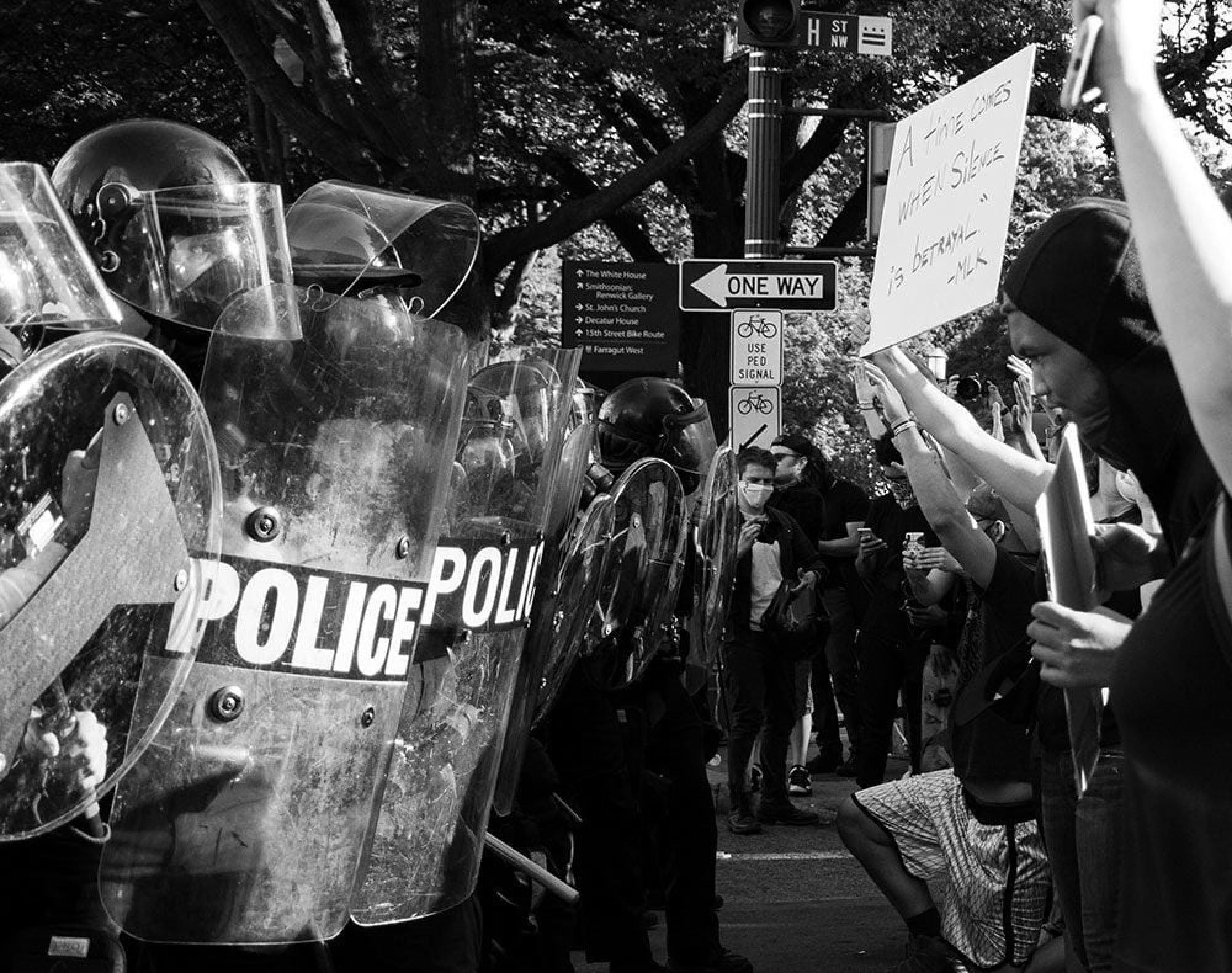
White people are so uncomfortable talking about race, that even using the word “white” in a conversation ignites a defensive and visceral reaction. And no, reverse racism isn’t a thing, in case that’s where you are headed next.
I am writing this piece after a conversation with an acquaintance of mine who inquired about my recent trip to Kansas. My response included the word “white” in reference to both the demographics as well as the lack of diversity. And this followed suit:
“I’m not trying to start a fight, I just never understand why people point out skin color. If I described a place as a ‘black people everywhere’ I would be construed as a racist. So I should point out skin color when talking? “I was talking to this black guy today” or “some asshole asian cut me off in traffic today”. I just don’t understand how it adds to the discussion.”
If you understand privilege, you accept that there are places you cannot be and language you cannot use. It also means acknowledging you benefit off a system designed to maintain barriers to racial equality. While I am not arguing against other factions of intersecting oppressions, I am arguing that as a white person race, is not a factor and that merit alone did not get us where we are today. That truth is so fundamentally abstract to most, that even the slightest inclination of suggesting that the power of privilege has significantly contributed to one’s economic position, is viewed as both outlandish and insulting. The exhaustive and circular conversation usually ends with, “why does everything have to be political with you, it’s not always about race”. And you know what, he isn’t wrong, it’s not always about race, because he gets to CHOOSE when it is.
Short of asking him to open a history textbook or read primary documents, I will attempt to scratch the surface of his temperament. First, we must begin by confronting the definitions of racism so that when people decide that racism is just prejudice, we can challenge that notion by acknowledging that in doing so we single-handedly ignore the lived experience of every person of color in this country. However, if we agree that there are structural and systemic faucets in place that adversely impact communities of color socially, politically and economically – then, and only then, we can move the conversation forward. So yes, white people, your language has consequences, and the historical implications of using inflammatory language, or ignoring racism altogether, directly impacts custom and policy which perpetuate racism. It is language and ideologies steeped in white supremacy and carried out in microaggressions that undoubtedly contribute to Denver Public Schools being more segregated now than they were prior to Brown v. Board, why Flint Michigan still doesn’t have clean water, and why, despite Batson v. Kentucky, racial disparities in incarceration are the highest in the world.
Privilege is understanding that you get to decide when race matters, and just because it makes you feel uncomfortable in the realization that perhaps you aren’t wholeheartedly deserving of your socioeconomic position, that merit alone is not why you are where you are – that doesn’t negate your direct contribution to a system designed to maintain racial inequality in this country.
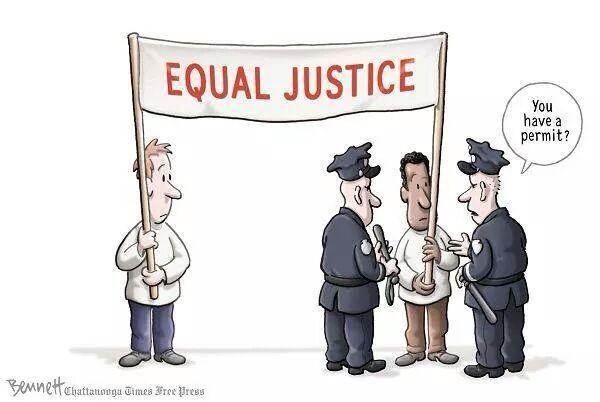
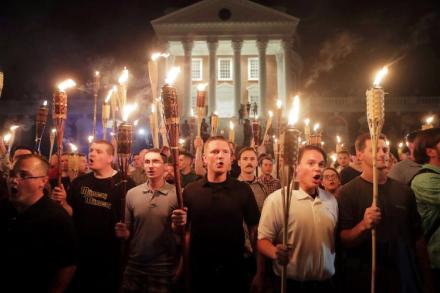
 conflict theory states that social order is maintained by domination and power, rather than consensus and conformity, American history and our political climate certainly support that idea. Contrary to popular opinion, I do not think that the privileged (celebrity, wealthy, elite) shape or define the law, rather the penalization of criminal infractions are not evenly distributed. Therefore, it is within the realm of rationality to assert that law and the implementation of policy is subjective. The basis of this subjectivity, though abundant, racism and socioeconomics remain at the forefront. The question no longer becomes what is criminality, but how do we as a collective society define criminal. Empirical evidence shows us that if you are a black man, the probability you will experience stop and frisk, get arrested and serve jail time is significantly higher than that of your white counterpart. This same evidence also debunks the perception that blacks are more likely to commit crimes, which is in direct contradiction to the narrative of black criminality; they are however, more likely to get penalized. What does this truly say about how “criminality” is defined not only by our law but by society? Why is it that Brock Turner can serve a 30-day jail sentence for the rape of an unconscious woman and not a single officer served time for the death of Freddie Gray? The criminal justice inequality in America has fueled groups like the Black Lives Matter movement in the same way it did for the Black Panther Party during the Black Power Movement in the late 60s. These resistance groups erupted and gained notoriety as a direct response to this perpetuation of state violence against black and brown communities. Ta-Nehisi Coates believes that if there is an answer to contemporary racism, it lies in confronting the past. If we are to understand the significant of his statement we must look towards Michelle Alexander, as she thoroughly researched mass incarceration in her book, The New Jim Crow, and found that there are more black men under correctional control than there were under slavery. Let that sink in. It is difficult to see the criminal justice system as anything other than a tool used to systematically disenfranchise, marginalize and render citizens, disproportionately people of color, to permanent 2nd class citizens. Mass incarceration and policies enforced against communities of color are used to create and maintain racial subordination. We continue to impose this racial hierarchy, when we prosecute former convicts once they have served time. We see this in the form of limited employment, which requires acknowledgement of a previous felony on job application. We see this by restricting and in some states outright banning their right to participate in elections. If we remove a citizen’s right to participate in a core function of our democracy, what purpose or contribution can they serve when the law has stamped their being as expendable? James Baldwin warned that, “the most dangerous creation of any society is that a man has nothing to lose.” History shows us that the subjugation of racial subordination is a necessary function of our economic structure. Mass incarceration continues to perpetuate the trend of free labor under the verbiage of the 13th amendment that outlawed slavery, “except as punishment for a crime.” The privatization of our prison industrial complex, ensures a social order by domination, just as chattel slavery did at inception of this country. The system of caste, specifically by race, has not disappeared from the American conscious, but has become more effective in terms of oppression.
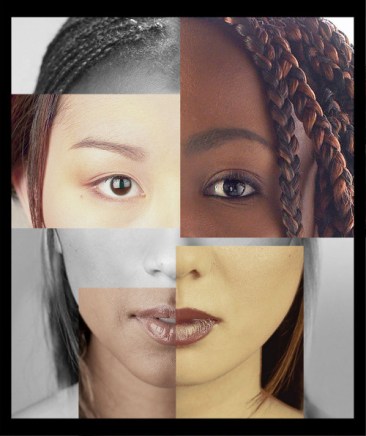 As the National Anthem blared in the background, I found myself paralyzed in deep contemplation. After watching America Divided earlier in the day, I sat there as the song rang loudly over the speaker and thought how this song is defined by other people in America. And I found myself asking, how would the people in Flint Michigan define this song, the victims of hurricane Katrina, the students of Pinellas county, the residents of the NYC still facing discriminatory housing practices, the occupants of the south side of Chicago, ex-factory workers in Detroit or the Standing Rock Sioux Tribe? I want to know how this America, the America we stamped as expendable – would define this anthem?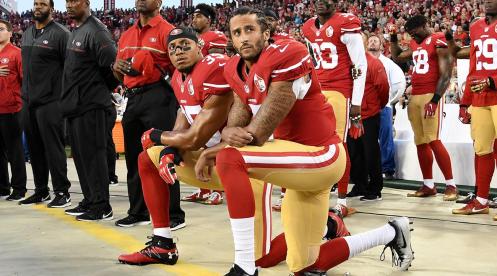
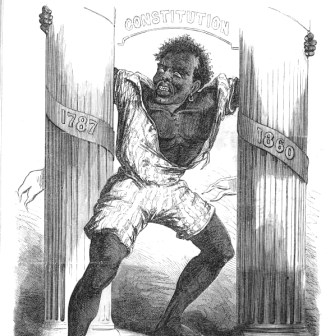 Tensions between the principle of freedom and American practice are certainly not new. Former slave Frederick Douglas provocatively posed this question in his 1852 speech “What to the Slave is the 4th of July. Lamenting the existence of human bondage in America he chastised Americans for celebrating their freedom and independence while enslaving 3 million people. If freedom is defined as the power to act, speak and think without hindrance and restraint how can we explain polices that disproportionately affect people of color, specifically within the criminal justice system?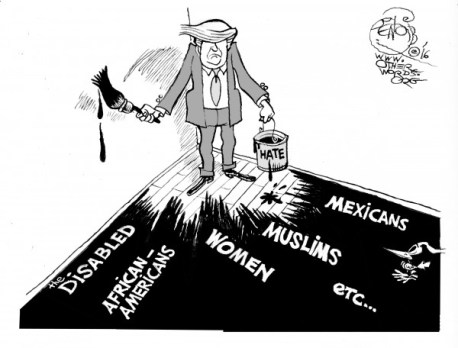
 Challenge The Narrative